Geotechnical Engineering
Percent Compaction Calculator
Calculate field dry density, percent compaction, density acceptance, and moisture-band status from field and Proctor test data.
Engineering schematic
Field density acceptance workflow
Static symbolic figure. Enter project values in the calculator fields below.
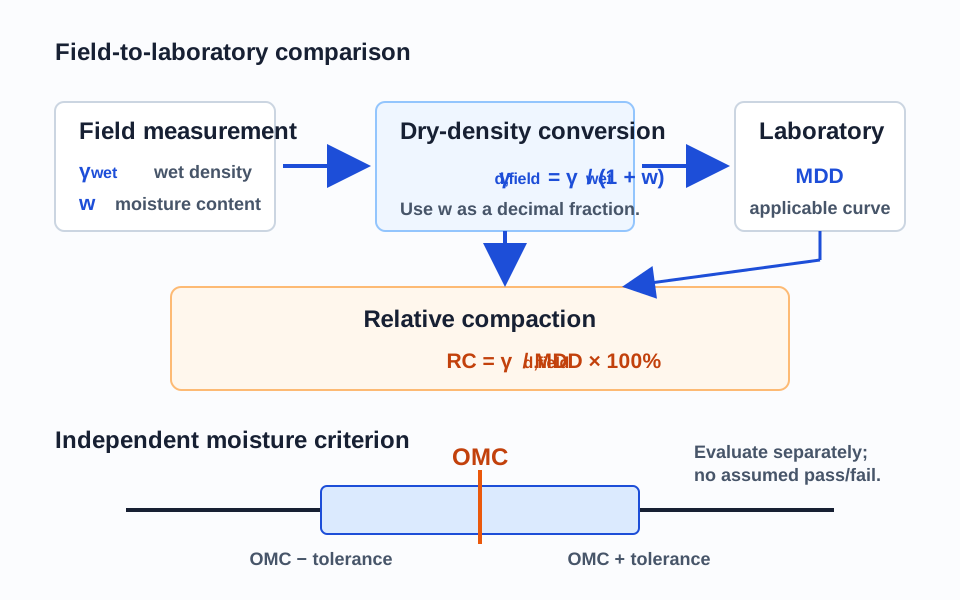
- γwet
- field wet density
- w
- field moisture content as a decimal in the equation
- γd,field
- calculated field dry density
- MDD, OMC
- laboratory maximum dry density and optimum moisture content
- RC
- relative compaction
Result
Meets entered criteria: 95.5% compaction
Field dry density
112.73 pcf
Minimum required dry density
112.1 pcf
Percent compaction
95.5%
Density criterion
Pass
Moisture band
9% to 13%
Moisture criterion
Within band
Step-by-step calculation
- Convert moisture content
- Field dry density
- Relative compaction
- Minimum required dry density
- Entered moisture band
What this means
The field result meets both the entered relative-compaction requirement and moisture band.
Important limitations
- Acceptance must follow the project specification, test method, correction procedures, and authorized engineering judgment.
Assumptions
- Field wet density and laboratory maximum dry density use the same units
- The laboratory Proctor curve represents the material tested in the field
- Rock corrections and project-specific acceptance rules are handled separately
Formula Used
Step-by-Step Example
A field wet density of 124.0 pcf at 10.0% moisture gives 112.73 pcf dry density. Compared with a 118.0 pcf Proctor MDD, relative compaction is 95.5%.
Engineering Notes
- Use the laboratory curve that represents the field material and required Standard or Modified Proctor effort.
- Density and moisture may be separate acceptance criteria; a density pass does not override a moisture failure.
- The calculation does not include oversize-particle corrections, test-location judgment, or method-specific bias.
FAQ
What is percent compaction?
Percent compaction, or relative compaction, is field dry density divided by the applicable laboratory maximum dry density, multiplied by 100.
Can density pass while moisture fails?
Yes. Some specifications require both a minimum relative compaction and a moisture range. The governing project requirements control acceptance.
Does the calculator apply rock correction?
No. Oversize-particle corrections and test-method limitations must be handled under the governing standard and project specification.