Drainage and Hydrology
Manning's Equation Calculator
Calculate open-channel velocity and discharge from area, hydraulic radius, slope, and Manning roughness.
Engineering schematic
Open-channel flow geometry
Static symbolic figure. Enter project values in the calculator fields below.
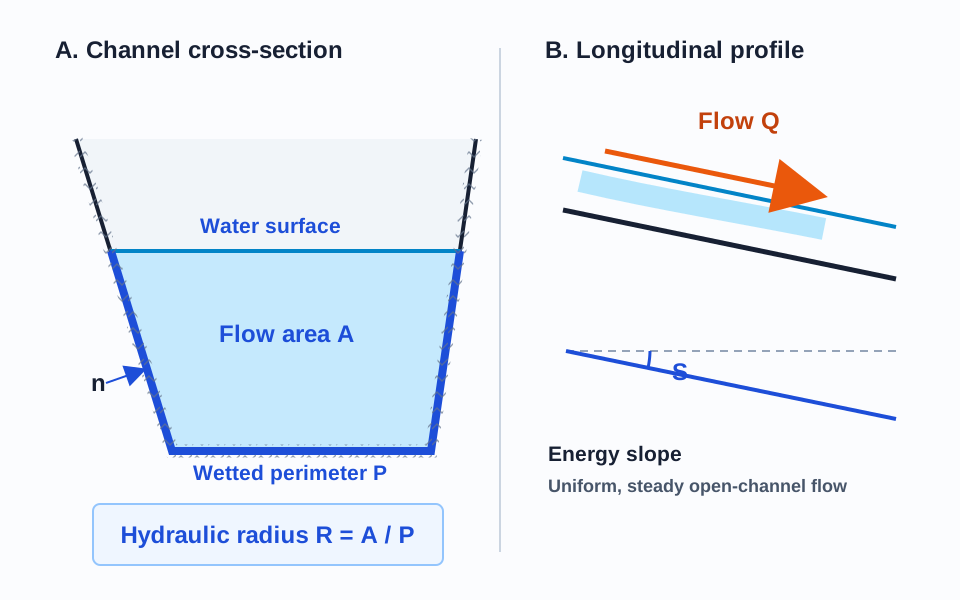
- A
- flow area
- P
- wetted perimeter
- R
- hydraulic radius, A/P
- S, n, Q
- energy slope, Manning roughness, and discharge
Result
Discharge: 27.12 cfs
Velocity
3.39
Discharge
27.12
Coefficient
1.486
Step-by-step calculation
- Unit-system coefficient
- Mean velocity
- Discharge
What this means
Check that the hydraulic radius and roughness are appropriate for the actual channel shape and flow regime.
Assumptions
- Uniform steady open-channel flow
- Positive bed slope
- Hydraulic radius already accounts for wetted perimeter
Formula Used
Step-by-Step Example
For A=8 ft2, R=1.2 ft, S=0.005, and n=0.035, flow is about 28.8 cfs.
Engineering Notes
Check units, assumptions, boundary conditions, groundwater, drainage, and whether the simplified method is appropriate before using a result in any project decision.
FAQ
What is hydraulic radius?
It is flow area divided by wetted perimeter.